

Finding the Right Tone: Bluegrass Bass and Sheldon’s Story

You can’t talk about bluegrass bass without talking about tone.
When I switched from orchestral to bluegrass playing, I brought a lot of technique with me—but what really changed was my relationship to tone. In an orchestra, the bass is part of this big, sweeping wave. In bluegrass, it’s the heartbeat. Every note has to matter. It’s got to punch through the mix just enough to hold the whole thing together, but never draw too much attention to itself. It’s not flashy—but it is essential.
For this EP, I spent a lot of time thinking about how I wanted the bass to sound. I wanted warmth. I wanted weight. I wanted that feeling you get when someone you trust says, “I got you”—and means it. That's what the bass should feel like.
And that’s exactly what Sheldon brought to the table.
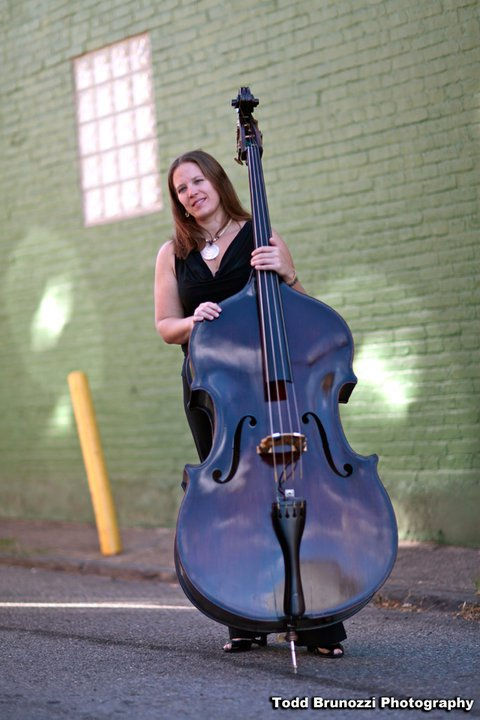
Sheldon (yep, the bass) was built in 1994 by Rumano Solano, modeled after my teacher Jeff Turner’s Panormo. Jeff, the longtime principal bassist of the Pittsburgh Symphony, is the reason Sheldon exists at all—he was originally built for Jeff.
Sheldon eventually found his way to me—thanks to my mom and stepfather, who made some pretty incredible sacrifices to help me follow this path. They even remortgaged their house so I could buy the bass when I was in undergrad. And, my mom named him Sheldon.
Sheldon’s not a bass I get to play every day. He’s too delicate for bars and campfire jams—too refined to risk in the wild. But when I do get to play him, like I did on this record, it feels like a homecoming. His voice is deep, rich, and honest. You can hear it in every track on the EP—steady, supportive, and full of heart.
That’s the role I’ve always loved most in bluegrass: the support system. The rhythm section. The person in the back making sure the whole thing stays upright—literally.
So if you catch yourself tapping your foot, there’s a good chance that’s me and Sheldon—just doing our job, one note at a time.

Comments